

I Know It Feels Horrible, But Get Your Grip Right!

Getting your golf grip right is one of the most important steps to improving your contact and overall consistency. Many golfers overlook this fundamental aspect, but the way you hold your club directly affects the club face, club path, and power through the release. In this post, I’ll share practical tips and techniques to help you master your golf grip, so you can see real improvements on the course.
Why Your Golf Grip Matters
The grip is your only physical connection to the club, so it influences every part of your swing. A incorrect grip can cause slices, hooks, or inconsistent ball striking. On the other hand, a proper fitted grip helps you square the clubface at impact, leading to straighter shots and better distance control.
Many beginners struggle because they don’t understand the different grip styles or how to adjust their grip for different shots. Even experienced players can benefit from revisiting their grip to fix subtle flaws that limit their performance.
Types of Golf Grips
There are three main types of grips used in golf instruction. Each has its own feel and advantages:
Interlocking Grip
This grip links the pinky finger of the trailing hand with the index finger of the lead hand. It offers a secure hold and is popular among players with smaller hands.
Overlapping Grip
The pinky finger of the trailing hand rests on top of the index finger of the lead hand. This grip provides good control and is widely used by professional golfers.
Ten-Finger Grip (Baseball Grip)
All ten fingers hold the club without interlocking or overlapping. This grip can feel more natural for young juniors, beginners or players with weaker, injured or arthritic hands.
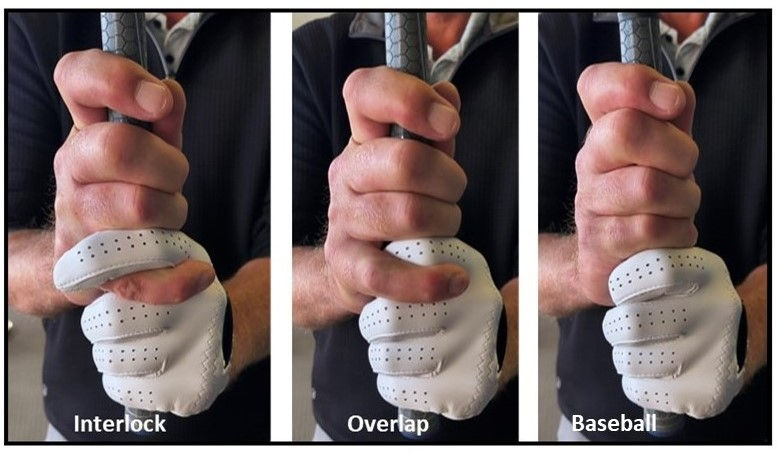
Try each grip style during practice to see which feels most comfortable and gives you better control.
How to Position Your Hands Correctly
Proper hand placement is key to a consistent golf grip. Here’s a step-by-step guide:
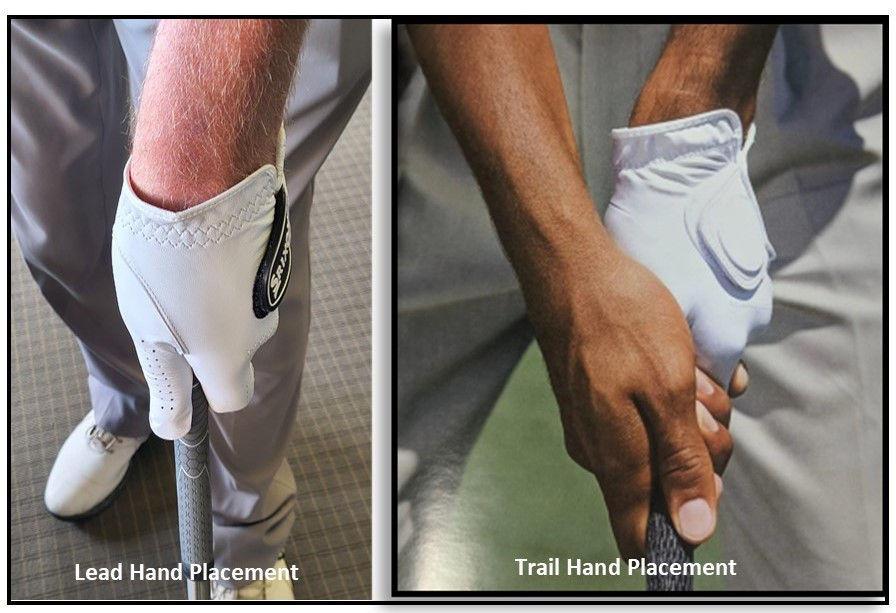
Lead Hand Placement
Place the club in the fingers of your lead hand (left hand for right-handed golfers). The grip should run diagonally across your fingers, starting near the base of your pinky and ending near the middle joint of your index finger. Your thumb should rest slightly right of center on the grip. You should be able to see 2 knuckles and the line between the thumb and finger should be pointing to the trail shoulder.
Trailing Hand Placement
Position your trailing hand so that the palm faces the target. The lifeline of this hand should cover your lead thumb. The thumb of the trailing hand should rest slightly left of center on the grip.
Grip Pressure
Hold the club firmly but not tightly. Imagine holding a tube of toothpaste without squeezing any out. Too much tension works it's way up through the body and restricts your swing, while too little causes the club to slip. There are three pressure points that I focus on. The first is in your lead pinky. Focus on pressure there as you take practice swings. You will feel the pull of the lead hand as you swing through.
Common Grip Mistakes and How to Fix Them
Even small grip errors can cause big problems. Watch out for these common mistakes:
Too Much Palm Involvement
If your palms dominate the grip, you may lose wrist hinge and control. Focus on holding the club mainly with your fingers.
Incorrect Thumb Position
Thumbs placed too far left or right can open or close the clubface, cause early release on the downswing, among other issues. Keep your thumbs just off the centerline of the grip. (Above photo)
Grip Too Tight
A tight grip causes tension in your arms and shoulders, reducing swing fluidity. Relax your hands and forearms.
Hands Too Far Apart
Hands should be close together on the grip to promote unity and control.
Adjusting Your Grip for Different Shots
Your grip doesn’t have to stay the same for every shot. However, I do recommend that you focus on a neutral grip until it is comfortable and consistent:
Stronger Grip
Rotate both hands slightly to the right (for right-handed golfers). This closes the clubface and can help produce a lower draw.
Weaker Grip
Rotate both hands slightly to the left. This opens the clubface and can help hit a higher fade.
Neutral Grip
Hands are positioned so the Vs formed by your thumbs and index fingers point between your chin and right shoulder. This is the most balanced grip.
Experiment with these adjustments on the driving range to find what works best for your swing style.

Tips to Practice Your Golf Grip Effectively
Improving your grip takes focused practice. Here are some tips to help you build good habits:
Use a Mirror
Check your hand placement and grip position in a mirror to ensure consistency.
Record Your Grip
Video yourself holding the club to spot any mistakes you might not feel.
Practice Without a Ball
Focus on your grip and swing motion without worrying about hitting the ball.
Seek Feedback
Work with a golf instructor who can provide personalized advice on your grip and fundamentals.
Use Grip Trainers
Devices designed to guide your hand placement can reinforce proper technique.
How a Good Grip Improves Your Swing and Accuracy
A proper golf grip helps you:
Square the Clubface
This leads to straighter shots and better control over ball flight.
Generate More Power
Efficient hand placement allows for a smoother wrist hinge and faster clubhead speed.
Maintain Consistency
A repeatable grip reduces mishits and improves shot predictability.
Control Shot Shape
Adjusting your grip lets you shape shots intentionally, like fades or draws.
Mastering your grip is a foundational step in golf instruction that pays off with better swings and lower scores.

Comments